RECAP Research Spotlight: An exploration into students’ experiences, attitudes and agency in choice of digital tools when collaborating on group work

At RECAP, one of our core aims is to make research more accessible to families. Behind every study are passionate researchers working to better understand children, learning, development, and family life.
In our Research Spotlight series, we introduce the people behind the research - sharing their work, insights, and why their findings matter in the real world for parents and carers.
Today's work is from:
Dr Poppy Gibson, Lecturer in Education, The Open University
Dr Sagun Shrestha, Research Associate, The Open University
Helena Staszkiewicz, Associate Lecturer, The Open University
Did You Know?
➤ Collaborative tasks can lessen feelings of isolation that distance learning sometimes brings (Yu, 2020).
➤ However, Venter (2024) found that students are not always positive about online group work.
➤ Anxiety can be caused by having to be dependent on others to achieve a desired outcome but also students may worry about letting others down (Hilliard et al., 2020).
What was the research looking at?
Distance learning can be a flexible, more manageable way to study online without the need to attend a campus each day. But how do students feel when group work is introduced and expected as part of their distance learning course?
Collaborative activities develop the ability to work as part of a team; this is seen as an important skill in the workplace (Hilliard et al, 2020), and often the hope is that navigating these group dynamics can be a useful tool to take forward into other settings.
This project wanted to offer insight into real lived experiences of distance learning students, to find out their perceived benefits and challenges of having to work with others in online spaces, with the hope of gathering understanding to inform planning at module level for those designing learning activities.
How did you conduct your research?
Funded by The Praxis Scholarship Hub at the Open University, this project explored the experiences of six adult students when collaborating online.
After obtaining ethical approval, students were recruited through an email advert.
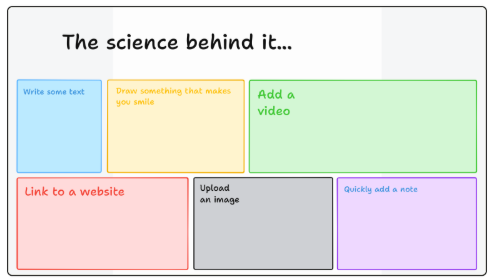
The six students took part in two online group activities where they had to work together to create a presentation and a science activity, and then each student had a 1:1 online interview with the researchers to understand more about their lived experiences of working with peers online.
Through an interpretative lens, this research project used thematic analysis to draw out perceived barriers and challenges that students felt when collaborating online with various tools.
What are your key findings?

The key positives of online group working that emerged from the data are:
Students found forum discussions an easy way to build on what others had said in a way that encourages thoughtful interaction.
The chance to meet someone new and learn from them.
The development of empathy and understanding from hearing other students’ experiences.
Issues around collaborative activities that emerged from the data are:
Lack of participation from some members.
Difficulty in establishing communication.
Taking time to decide which tool or platform to use.
Any recommendations?
The researchers suggest that tutors can help to support distance learners if collaborative work is set, through these strategies:
1. Longer planning in collaborative activities; give students more time for group tasks than independent tasks to factor in the necessary time for the initial communications to happen before the work can begin.
2. The findings suggest students prefer being instructed on which tool or platform to use, rather than having a choice, as this creates another group decision to navigate.
3. Where possible, tutors should give structured guidance and steps as to how the group may want to approach the project, such as ideal deadlines for which different parts of the activity should be completed, which can help things run more smoothly.
Your final word…
Working on projects like this help us advancing inclusive practices and promoting outcomes for our learners. We can only do this if we hear voices of the learners themselves and listen to their lived experiences.

What are the skills and values that can be developed through online collaboration in distance learning?
Tell us in the comments
References and Recommended reading:
Hilliard, J., Kear, K., Donelan, H., & Heaney, C. (2020). Students’ experiences of anxiety in an assessed, online, collaborative project. Computers & Education, 143, 103675.
Venter, A. (2024) ‘Exploring the downside to student online collaborations’, The Independent Journal of Teaching and Learning, 19(1), pp. 64–78. Available at: https://doi.org/10.17159/ijtl.v19i1.18853.
Yu, E. (2020) ‘Student-Inspired Optimal Design of Online Learning for Generation Z Student-Inspired Optimal Design of Online Learning for Generation Z’, The journal of educators online, 17(1).


Comments