Screen Time & Early Development
What does screen time really mean for young children’s development?
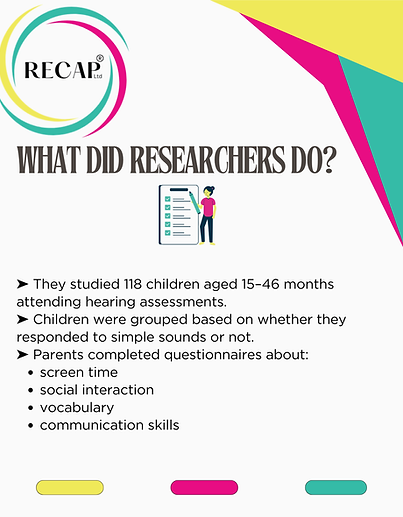
This resource breaks down a study exploring the relationship between entertainment screen time (EST) in the early years and children’s response to sound, communication, and social development.
The research looked at how much screen time young children were having, alongside their developing language, attention, and social interaction skills. It explored whether differences in screen use were linked to how children engage with the world around them — particularly how they respond to simple sounds.
Findings suggest that higher screen time was associated with lower responsiveness to sound, smaller vocabularies, and reduced social and communication skills. However, the study also highlights the importance of everyday interaction, conversation, and shared experiences in supporting development.
📚 This summary highlights what the research found, what it might mean in practice, and why balance and connection are key.
📌 Whether you're a parent, educator, or professional supporting young children, this offers a clear and balanced starting point for understanding the role of screen time in early development.
📎 Dive into the findings, share with your friends, and join us in making research easier to access, understand, and use.
🔗 Want to explore the full study? An association between auditory responsiveness of children and duration of entertainment screen time in the early years of life.